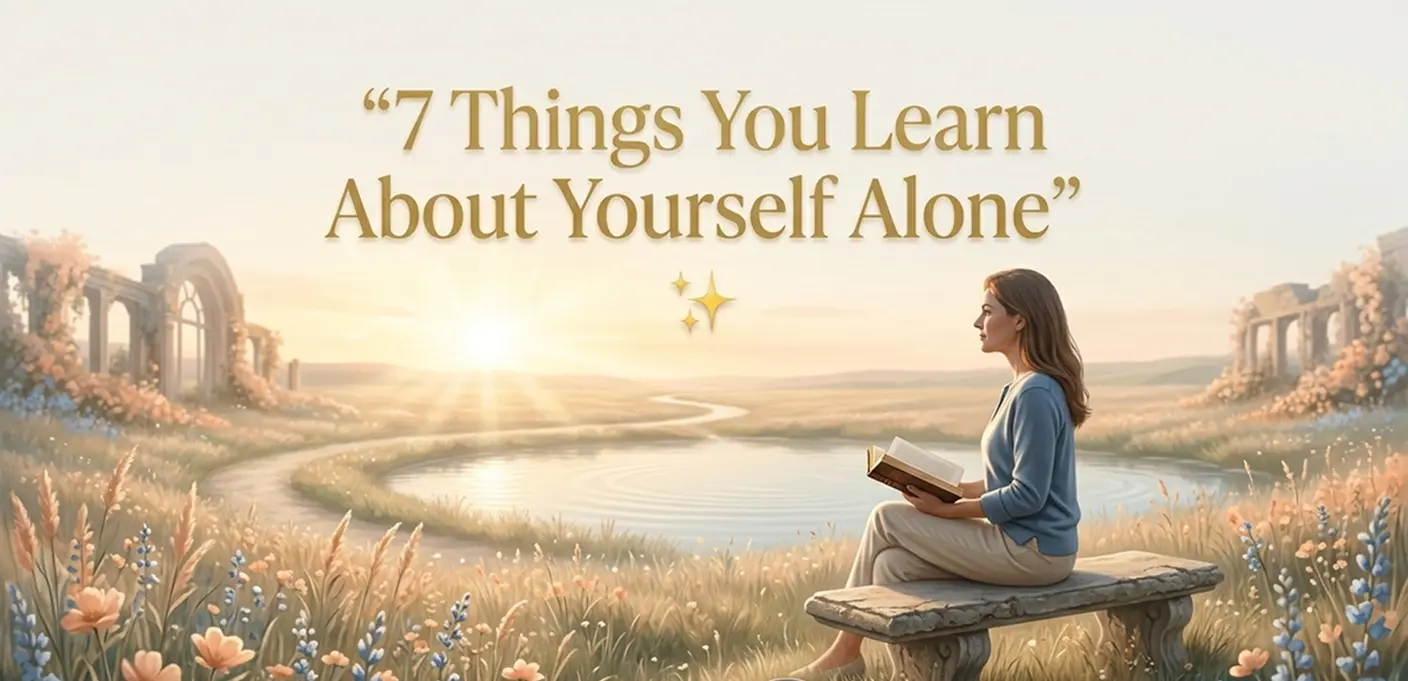
7 Things You Only Learn About Yourself When You Spend Time Alone
Most people are uncomfortable with silence. Not because silence is unpleasant, but because of what shows up in it.
When the noise stop,s and the distractions fall away, you’re left with something most people spend enormous energy avoiding: themselves. Their actual thoughts. Their unfiltered feelings. The questions they’ve been too busy to sit with.
But the people who learn to be alo, not really alone, without numbing or performing or filling every quiet moment with stimulation, ion tend to discover things about themselves that no amount of conversation, advice, or external validation could have told them. These 7 lessons are what that silence tends to teach.
When You Stop Filling Every Quiet Moment
The Situation: You put the phone down. The podcast ends. The room goes still. And instead of peace, the first thing you feel is a low, restless discomfort, for the urge to reach for something, anything, to fill the space.
The Lesson: The discomfort of silence is not empt,iness it is everything you haven’t let yourself feel yet.
The Insight: Most people mistake the discomfort of stillness for a sign that something is wrong. It isn’t. It is simply the sound of a mind that has been running on distraction, finally being asked to slow down. Sit with it long enough, and the restlessness softens,s and underneath it, you start to hear things that actually matter.
“You don’t need more noise. You need to stop drowning out what the quiet is trying to say.”
“The discomfort you feel in silence isn’t a problem to solve. It’s a signal worth listening to.”
When You Realize How Much You Do for Approval
The Situation: Alone, with no audience, you notice something strange, but you’re not sure what you actually enjoy. What you eat, watch, wear, or spend time on has been subtly shaped, for longer than you’d like to admit, by what other people think of it.
The Lesson: Solitude strips away performance and shows you what remains when no one is watching.
The Insight: So much of daily life is unconsciously curated for an external audience, once the choices, the opinions, even the emotions you allow yourself to express. Time alone removes that audience entirely. And what’s left of the things you choose, enjoy, and return to when no one is there to validate them is a far more honest portrait of who you actually are.
“Spend enough time alone and you’ll discover how many of your preferences actually belong to you.”
“Who you are with no audience is who you actually are.”
When Your Own Company Starts to Feel Like Enough
The Situation: You’ve been conditioned to treat being alone as something to escape, a temporary state between social engagements, something that implies loneliness or failure. Then one day, alone on a quiet afternoon, you notice something unexpected: you’re okay. More than okay.
The Lesson: Loneliness and solitude are not the same thing,g and learning the difference changes everything.
The Insight: Loneliness is the ache of feeling disconnected. Solitude is the quiet fullness of being genuinely present with yourself. The shift from one to the other doesn’t happen automatically; ly it is cultivated, gradually, through the practice of spending time alone without treating it as a problem to be solved. When your own company becomes something you value, you stop needing others to fill a void, and your relationships become chosen rather than necessary.
“When you enjoy your own company, you stop settling for anyone who doesn’t add to it.”
“Solitude isn’t absence. It’s presence with yourself.”
When You Finally Hear What You Actually Think
The Situation: You’ve been surrounded by other people’s opinions for so long,g their takes, their advice, their certainties that somewhere along the way, your own voice got quieter. You know what everyone else thinks. You’re less sure what you think.
The Lesson: You cannot hear your own voice when you are constantly surrounded by everyone else’s.
The Insight: Other people’s perspectives are valuable, but they are not a substitute for your own. Time alone, away from the constant input of other people’s views, gives your own thoughts room to form, clarify, and strengthen. The opinions you hold after genuine reflection tend to feel more stable, more honest, and more entirely yours than the ones assembled from other people’s noise.
“The clearest thoughts you’ll ever have are the ones you form in the quiet before the world gets a chance to edit them.”
“You have opinions worth hearing. Give yourself the silence to find out what they are.”
When You Sit With a Feeling Instead of Escaping It
The Situation: Something uncomfortable surfaces grief, anxiety, disappointment, and a low mood with no clear cause. The instinct is immediate: reach for the phone, call someone, turn something on. Do anything but sit with it.
The Lesson: Emotions that are avoided don’t dissolve; they accumulate.
The Insight: Distraction is not processing. It is a postponement. The feelings you consistently avoid don’t disappear; they go underground, where they tend to surface later, louder, and at less convenient moments. Solitude creates the conditions to actually feel what you’re feeling to let it move through rather than pile up. It is uncomfortable in the short term and quietly transformative over time.
“You can’t outrun what’s happening inside you. Eventually, the quiet catches up.”
“Feeling something fully is almost always faster than avoiding it indefinitely.”
When You Stop Waiting for Someone Else to Make the Decision
The Situation: Alone, without anyone to consult or defer to, you realize how often you outsource your own choice,s not because you don’t have opinions, but because having someone else decide feels safer than being responsible for the outcome.
The Lesson: Solitude builds the trust in yourself that other people’s opinions have been quietly replacing.
The Insight: The habit of constantly seeking external validation before making decisions is not humiliating, ty it is a quiet erosion of self-trust. Time alone, making small decisions with no one to approve them, rebuilds that trust incrementally. You start to discover that your instincts are more reliable than you’ve been giving them credit for and that the approval you’ve been waiting for was yours to give all along.
“Every time you ask someone else what you should do, you practice not trusting yourself.”
“Your instincts have been right more often than you’ve acknowledged. Start listening to them.”
When You Realize That Rest Is Not the Same as Doing Nothing
The Situation: You sit down with no plan, no productivity, no purpose beyond simply being still. And almost immediately, a familiar guilt creeps in in the sense that you should be doing something, producing something, moving toward something.
The Lesson: Rest is not the absence of effort; it is the condition that makes effort sustainable.
The Insight: A culture that equates worth with output has made genuine rest feel like a moral failure. But the mind and body do not operate like machines; they require recovery, not just performance. The stillness that feels unproductive is often where the most important things happen: clarity returns, creativity resurfaces, and the sense of direction that busyness was drowning out quietly makes itself known again.
“Rest is not what you do when you’ve earned a break. It’s what makes everything else possible.”
“The most productive thing you can sometimes do is absolutely nothing and mean it.”
A Final Thought
Solitude is not a personality type or a preference. It is a practice that most people resist until they have no choice, and then wonder why they waited so long.
You don’t have to retreat from the world to spend time with yourself. You just have to be willing, occasionally, to put down the noise and sit with whatever is there.
What you find won’t always be comfortable. But it will almost always be true. And the truest things about yourself, the ones you find in the quiet, without an audience, without pperformancee those are the ones most worth knowing.