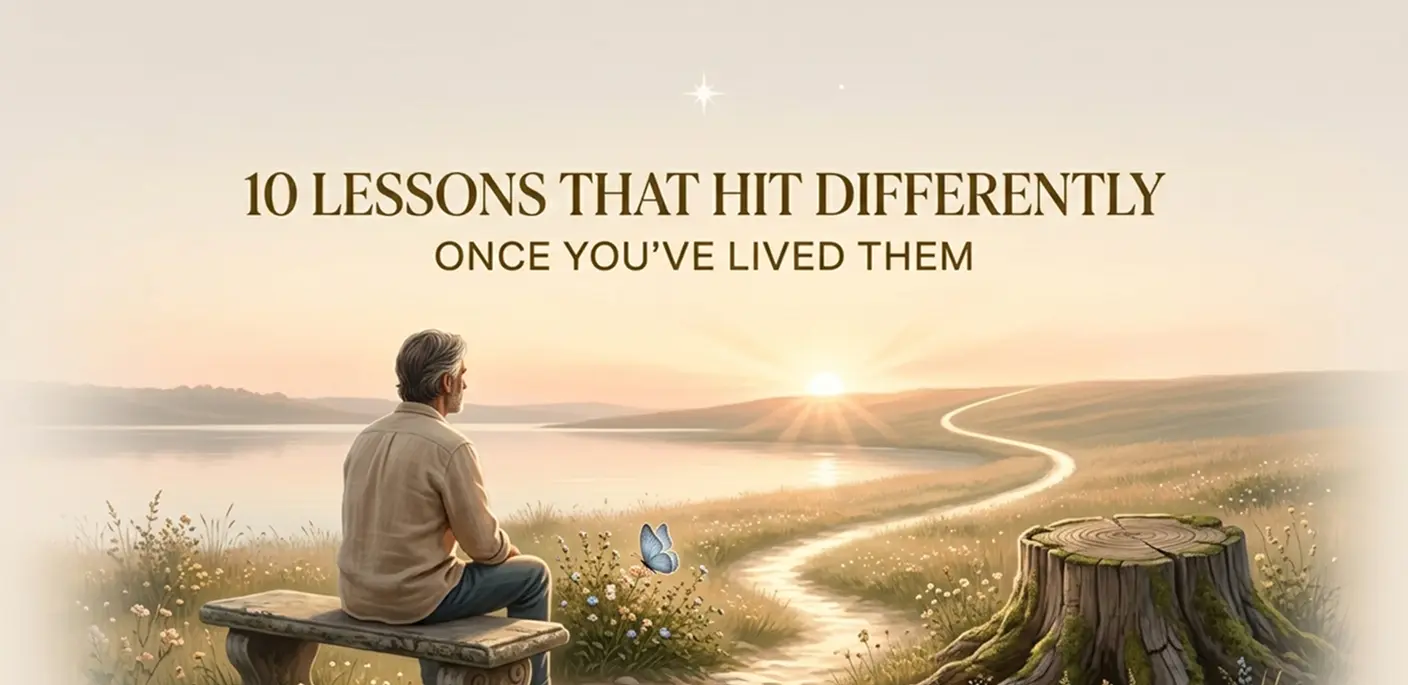
10 Lessons That Changed How I Think About Growing as a Person
Personal growth doesn’t announce itself. It doesn’t arrive with a breakthrough moment or a single book that rewires everything.
Most of the time, it’s quieter than that. A small shift in how you respond. A pattern you finally name. A habit you stop defending because you’ve started being honest about what it costs you.
These ten lessons won’t tell you to wake up earlier or journal more. They’ll show you where growth actually lives and how to find it in the life you’re already living.
When You Keep Getting the Same Result and Can’t Figure Out Why
The Situation: Different job, same frustrations. Different relationship, same arguments. Different year, same feeling of being stuck. The scenery changes, but the problem follows.
The Lesson: When the same pattern keeps appearing across different circumstances, you are the common variable.
The Insight: This isn’t self-blame, it’s the most empowering observation available. Because if external circumstances were the cause, you’d have no leverage. But if you’re the thread running through every repeated outcome, then you are also the place where change is possible. Growth begins the moment you stop asking “why does this keep happening to me?” and start asking “what am I bringing to this that I haven’t examined yet?”
“The pattern isn’t bad luck. It’s information you haven’t acted on yet.”
Small action: Identify one recurring frustration in your life. Write down what role you played, not to assign blame, but to locate your leverage.
When You’re Consuming More Than You’re Creating
The Situation: You read about habits, watch videos on productivity, and follow people who inspire you. But doing the actual output keeps getting deferred to a version of you that feels more ready.
The Lesson: Consuming ideas about growth is not the same as growing.
The Insight: Information without application is just entertainment with good intentions. At some point, the next article, course, or podcast isn’t preparation; it’s avoidance dressed up as self-improvement. Real growth leaves evidence. It shows up in what you make, how you respond, and what you’ve changed. The discomfort of creating something imperfect is the actual practice.
“You can’t think your way into a better version of yourself. You have to act your way there.”
Small action: Pick one thing you’ve been learning about and do a small version of it today, imperfect, unfinished, real.
When Criticism Lands Harder Than It Should
The Situation: Someone offers feedback not even harshly, and something in you shuts down, deflects, or quietly seethes. You know, logically, they might have a point. But the reaction is instant and protective.
The Lesson: The feedback that stings the most is usually pointing at something true.
The Insight: Defensiveness is a useful signal. It rarely appears around criticism that’s completely off-base. It appears when something is close enough to feel threatening. Growth means developing the ability to separate the delivery of feedback from its content, to ask is there anything here worth using? even when the messenger wasn’t kind. That question, asked honestly, opens more doors than any compliment.
“The version of you that can hear hard things without collapsing, that’s who you’re becoming.”
Small action: The next time you feel defensive, wait 24 hours before responding. Then ask yourself: what part of this, if true, would I want to change?
When You Shrink to Keep the Peace
The Situation: You hold back an opinion. Agree when you don’t. Take up less space because it feels easier than the tension that comes with being fully yourself around certain people.
The Lesson: Every time you edit yourself to manage someone else’s comfort, you practice becoming smaller.
The Insight: This one accumulates quietly. No single instance feels significant; it’s just easier this time, more convenient, not worth the conflict. But the habit of self-erasure compounds. Growth requires honoring the version of you that has something real to say, even in rooms where that’s not the default. You can be kind and still be honest. You can preserve a relationship and still take up space in it.
“Making yourself smaller doesn’t keep the peace. It just keeps the silence.”
Small action: In your next conversation, say one thing you’d normally hold back calmly, clearly, without apology.
When You’re Afraid of What Growth Might Cost You
The Situation: You can see who you’re becoming. But that version of you might not fit the life you currently have, the relationships, the identity, the familiar story people have of who you are.
The Lesson: Growth always involves outgrowing something, and that loss is real even when the direction is right.
The Insight: Nobody talks about the grief of becoming. The friendships that quietly don’t survive who you’re turning into. The old self-image you have to release. Growth isn’t only gain it involves genuine letting go. Acknowledging that doesn’t mean stopping. It means moving forward with honesty instead of pretending the cost isn’t there.
“You’re allowed to grieve what you’re outgrowing. That doesn’t mean going back.”
Small action: Name one thing your growth is asking you to release. Acknowledge it honestly, then decide if you’re willing to let it go.
When Comfort Stops Feeling Like Rest and Starts Feeling Like Hiding
The Situation: Your routines are fine. Life is stable. Nothing is wrong, but nothing is moving either. The comfort that used to feel earned now feels like a ceiling.
The Lesson: Comfort is necessary for recovery, but dangerous when it becomes the goal.
The Insight: There’s a version of comfort that restores you and a version that protects you from the friction that growth requires. The difference is whether you feel genuinely rested or quietly restless. If the same safe choices keep producing a low hum of dissatisfaction, that’s not a sign to be more grateful for what you have. It’s a signal to ask what you’ve stopped reaching for.
“There’s a difference between resting and hiding. Your gut already knows which one this is.”
Small action: Do one small thing today that slightly exceeds your comfort zone, not dramatic, just one step past the edge of easy.
When You Compare Your Progress to Someone Else’s
The Situation: Someone you know or follow, or vaguely remember from school, seems further along. More together, more successful, more visibly evolved. And suddenly your own progress feels insufficient.
The Lesson: You cannot grow meaningfully while measuring yourself against someone else’s visible highlights.
The Insight: Comparison borrows someone else’s metrics and applies them to your life, which is a completely different project with different starting conditions, different constraints, and a different definition of arrival. The most useful question isn’t whether they are further along than I? It’s am I further along than I was? That’s the only comparison with any real data.
“Your growth is not slow. You’re just measuring it against the wrong timeline.”
Small action: Write down three ways you’ve changed in the last year. Not achievements, actual shifts in how you think or respond.
When You’re Waiting for Motivation Before You Start
The Situation: You’re waiting to feel like it. For the energy to arrive, for the mood to shift, for the moment when starting feels natural. The start keeps moving forward one day at a time.
The Lesson: Motivation follows action; it rarely precedes it.
The Insight: The feeling of wanting to do something tends to arrive after you’ve started, not before. The brain rewards momentum, not intention. Starting badly, starting tired, starting with half the energy you think you need, these all work. Waiting for the right feeling is, functionally, a decision to stay still. Growth is built from starts that didn’t feel ready.
“You don’t wait for motivation. You move, and motivation shows up to see what’s happening.”
Small action: Choose the one thing you’ve been waiting to feel ready for. Set a two-minute timer and start it right now.
When You Mistake Being Busy for Moving Forward
The Situation: Your days are full. You’re always doing something. But at the end of the week, when you ask what actually moved what genuinely progressed, the answer is vague.
The Lesson: Busyness is easy. Direction is hard.
The Insight: Activity creates the sensation of progress without necessarily producing it. Growth requires periodically lifting your head from the noise and asking: Is what I’m doing aligned with where I want to go? Not as judgmental as calibration. A full calendar and a clear direction are not the same thing. One is motion. The other is motion that means something.
“Being busy is not the same as building something. One fills time. The other uses it.”
Small action: At the end of today, ask: what did I do that actually moved something forward? If the answer is nothing, that’s useful data.
When You Treat Self-Improvement as a Destination
The Situation: You’re working toward a version of yourself that has it figured out. Once you reach that version, the work will be done, and life will feel settled. That version keeps shifting just far enough ahead to stay out of reach.
The Lesson: Growth is not a destination; it’s the orientation you choose every day.
The Insight: The idea of a “finished” self is a useful fiction that keeps you moving but can also keep you perpetually dissatisfied with where you are. The people who grow consistently aren’t chasing completion; they’re genuinely curious about what’s next. They’re interested in the process, not just the outcome. That shift from getting there to being here and moving forward is one of the quieter and more profound changes growth can produce.
“There’s no version of you that has it all figured out. There’s just the version that keeps going anyway.”
Small action: Today, measure your growth not by how far you have to go but by honestly acknowledging how far you’ve already come.
A Final Thought
Growth doesn’t require a dramatic reinvention. It doesn’t require a perfect system or an ideal set of circumstances.
It requires a willingness to look honestly at your patterns, to act before you feel ready, and to stay curious about who you’re becoming even when that process is slow, uncomfortable, or quiet.
You’re already in it. The question is just how awake you choose to be while it’s happening.